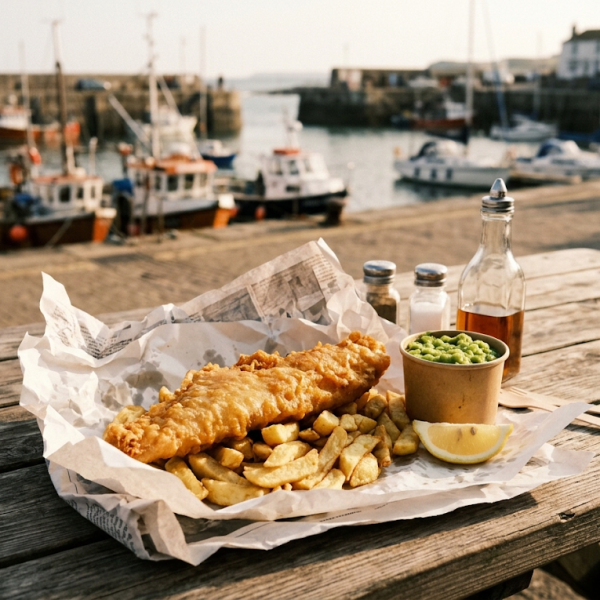
Few dishes are as closely tied to a nation as fish and chips is to Britain. Wrapped in paper, eaten by the sea and served with salt, vinegar and mushy peas, it is a ritual as much as a meal. For visitors who do not speak English as a first language, however, a British menu can be a puzzle. Toad in the hole contains no toads, bubble and squeak makes a noise only in the pan, and a ploughman's lunch has nothing to do with farming equipment. A good menu translation explains the food while preserving the charm of its name, so that guests know what they are ordering and still feel the local atmosphere. This article looks at how restaurants, cafes and food businesses can translate menus and labels for an international public.
Food Words That Do Not Travel
Every cuisine has dishes whose names make sense only to locals. Some are descriptive, some are historical and some are jokes that grew into tradition. A literal translation either sounds absurd or loses the meaning altogether. A better approach is to keep the original name, add a short explanation in the guest's language and, where helpful, a note about the main ingredients. For example, a name can stay in English while the description clarifies that the dish is a baked pastry with a meat filling. This method respects the culture and answers the first question that any customer asks, which is what is in it.
Allergens, Diets and Safety
Translation of food information is a matter of health. Allergens such as nuts, milk, eggs, fish, shellfish, gluten and sesame must be clearly identified, and the wording must be exact. Many countries require allergen labelling by law, and the rules differ. The tourism body VisitBritain offers guidance for businesses that welcome international guests and shows how important clear information is for a positive experience. Diet markers such as vegetarian, vegan, halal and gluten free should use symbols and consistent terms. Never rely on an automatic tool for this kind of text without review by a specialist.
Measurements, Prices and Portions
Portion sizes, weights and temperatures may be expressed in units that visitors do not use. Pints, ounces and degrees Fahrenheit confuse people from metric countries, and the reverse is also true. Provide conversions where useful, and explain unusual portion names, such as a small or large serving. Prices should show the currency clearly and indicate whether tax and service are included. If you accept special offers or fixed menus, describe the conditions in plain words. Clarity prevents disputes and makes guests feel respected.
Reaching Portuguese Speaking Guests
Many travellers from Brazil and Portugal visit the United Kingdom, and they appreciate menus that read naturally in their own language. A team offering portuguese translation can help with dish descriptions, drinks lists and promotional texts while respecting the differences between Brazilian and European Portuguese in vocabulary and spelling. Ask for a version for your main audience, and avoid mixing both varieties in one document, because this can look careless to native readers.
Online Menus, Reviews and Delivery Apps
Today, most customers read the menu on a phone before they arrive. Make sure that your website, social profiles and delivery platforms show correct translations, and update them whenever the dishes change. Respond to reviews in the language of the reviewer where possible, since a polite reply builds trust. Translated photos descriptions and opening hours also help tourists find you. Keep a master document with approved wording so that all platforms use the same names and descriptions, and avoid mismatches between the printed and online versions.
Staff, Interpreting and Service
Translated menus work best when staff are ready to answer questions. Teach servers a few key phrases for greetings, allergies and payment, and prepare a card with common questions and answers in the main languages of your guests. For private events or tours, consider hiring an interpreter, and read the difference between an interpreter and a translator so that you book the right professional. A friendly welcome, even in a few words, makes visitors feel at ease and encourages them to return and to recommend you to friends.
Humour, Tradition and Storytelling
Many food businesses have stories that customers love, such as the history of a recipe, the family who founded the shop or the origin of a local tradition. These stories can be translated and used on menus, walls and websites. The key is to adapt the tone rather than copy the words. A short, warm text with a clear message will be better received than a long and formal one. Humour needs special care, since jokes about food are often tied to local habits, and a translator can suggest equivalents that guests will understand and enjoy.
Review and Maintain Quality
Before you print, ask a native speaker to read every translation and to flag errors, odd phrases and anything that might offend. Check spelling, accents, prices and symbols. Update the menu when dishes or suppliers change, and keep records of past versions. With a careful process and a partner who understands both language and food, your menu can make every guest feel welcome and let your cooking speak for itself in any language.